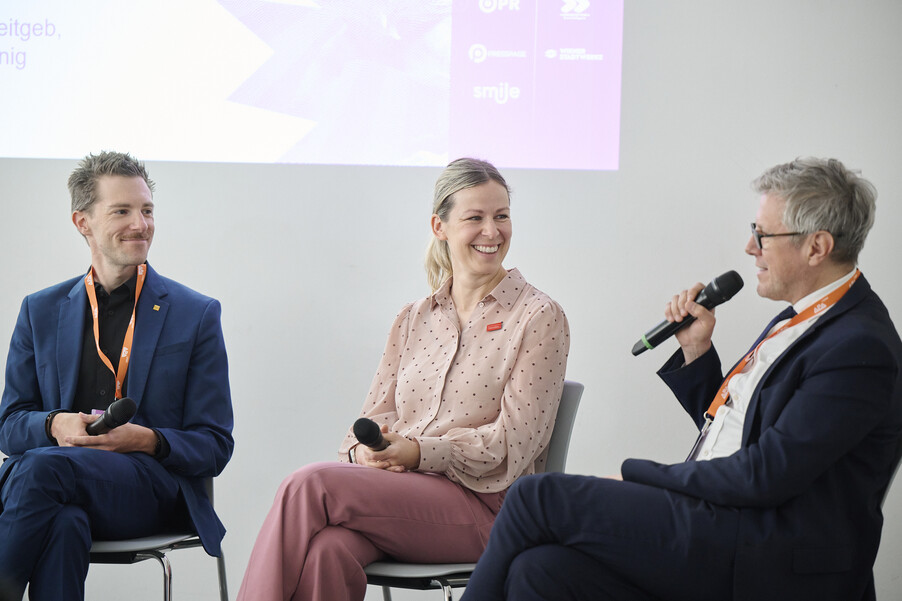
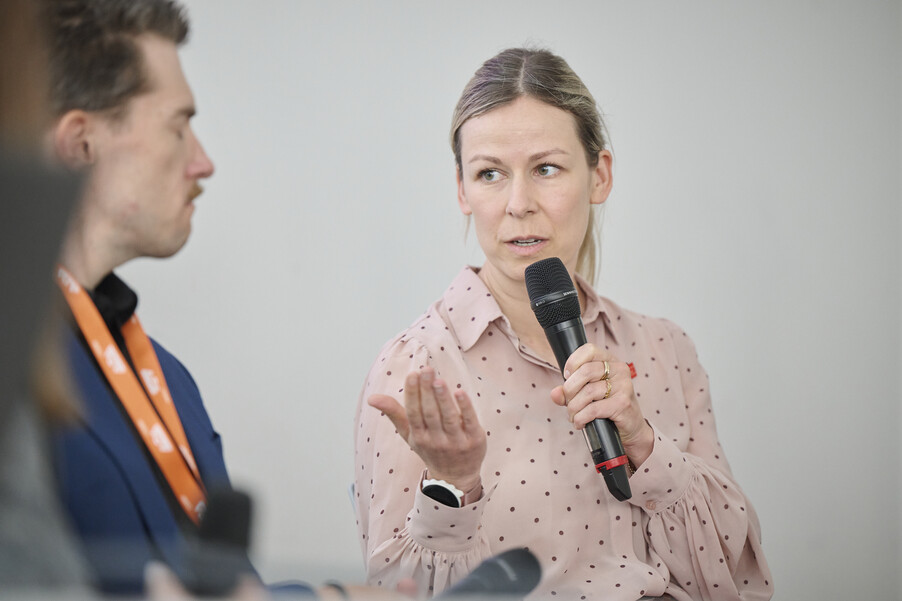
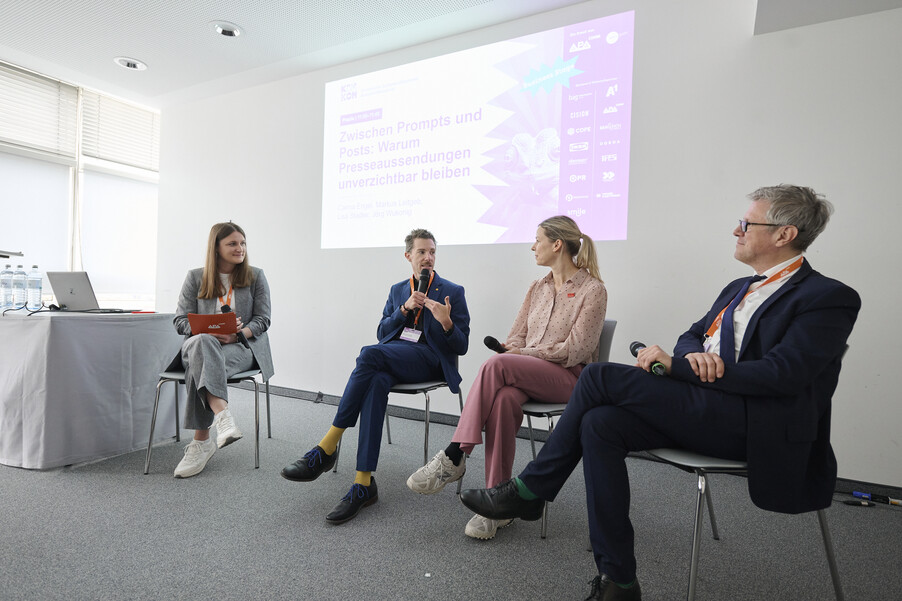
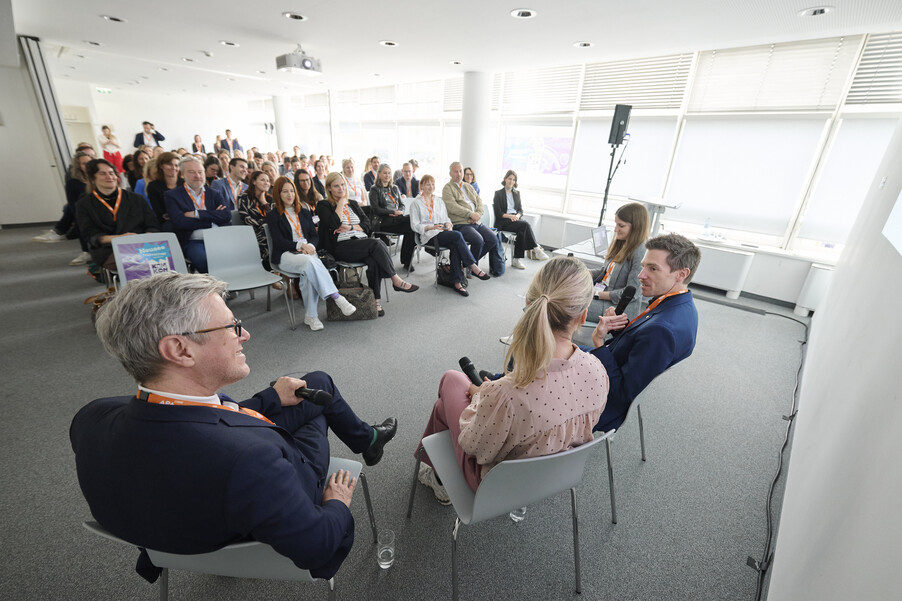
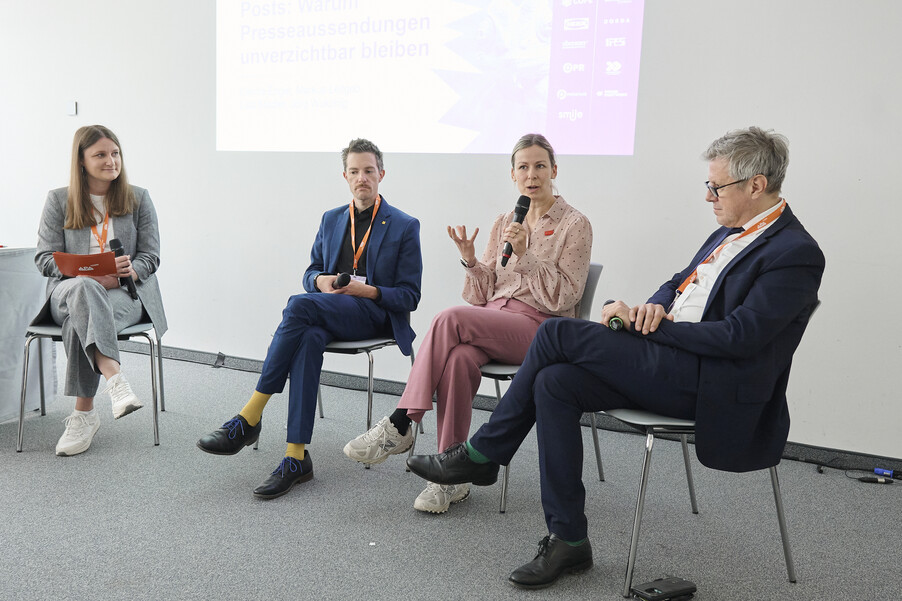
Ist die Presseaussendung ein Auslaufmodell? Natürlich nicht, befanden wir beim KomKon Tag 2026. Das waren die Eckpunkte der Podiumsdiskussion mit Markus Leitgeb (Post) und Jörg Wukonig (wukonig.com), moderiert von Carina Engel.
Mehr Kanäle, aber kaum einer fällt weg
Ein zentrales Thema unserer Diskussion war die schiere Kanalvielfalt, mit der Kommunikationsverantwortliche heute jonglieren müssen. Social Media, Newsletter, Podcasts, Bewegtbild – und nun auch noch KI-Systeme. Das Bild, das sich dabei aufdrängt: Video did not kill the Radio Star. Jeder neue Kanal addiert sich zum bestehenden Stack, anstatt einen anderen zu verdrängen.
GEO verändert das Handwerk – nicht das Prinzip
Eine der spannendsten Anpassungen, die wir besprochen haben, betrifft Generative Engine Optimization (GEO): Das ist kein Paradigmenwechsel, sondern handwerkliche Anpassung. Das Prinzip bleibt dasselbe: relevante Information so aufbereiten, dass sie die richtigen Empfänger erreicht – egal ob Journalist:in oder KI-System.
Trust, trust, trust
Zentral war die Diskussion über Vertrauen. In einer Medienwelt, in der KI-generierte Inhalte und Desinformation allgegenwärtig sind, gewinnt die Presseaussendung ausgerechnet durch das, was sie schon immer ausgezeichnet hat: den klar zuordenbaren Absender. Sie funktioniert wie ein Gütesiegel – die Information kommt nachweislich von Belvedere, von der Stadt Wien, von wem auch immer. Dieser Vertrauensanker wird in Zukunft noch wertvoller werden.
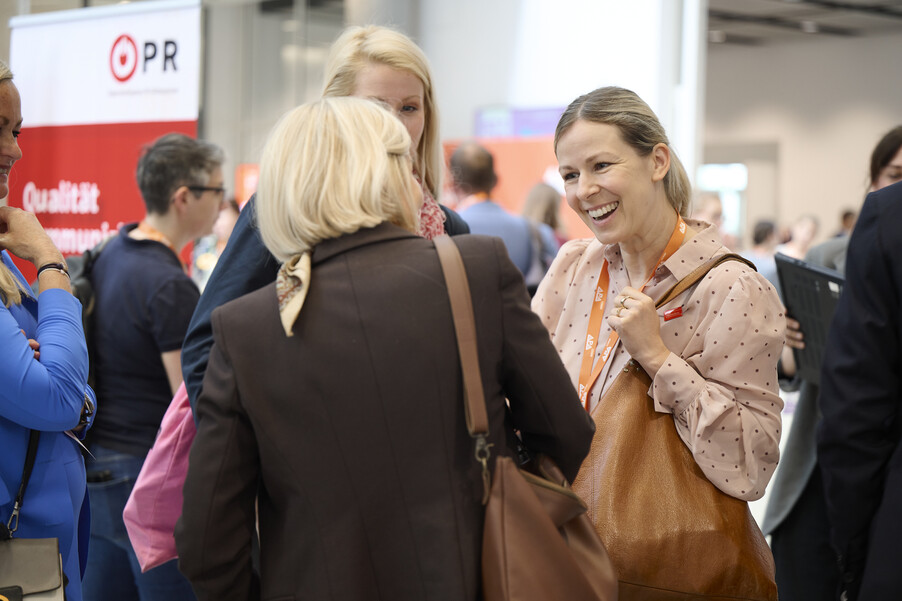
(Fotos: PRVA/APA-Fotoservice/Hörmandinger; Fotograf/in: Martin Hörmandinger)
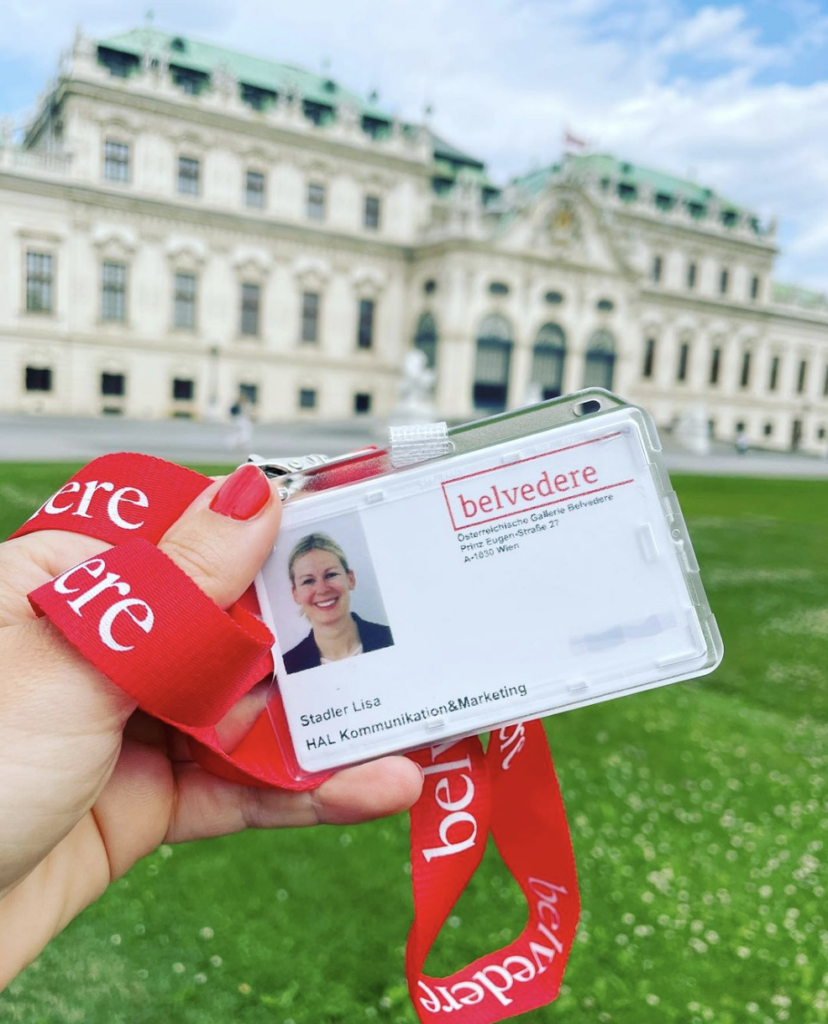
I recently had the opportunity to give a presentation on digital transformation at the Belvedere during a meeting of the Austrian Museum Association. While preparing for the presentation, I realized how consistently the current management has pursued digitization over the past decade. The foundations have been laid here to really advance the Belvedere digitally. It is a pleasure to drive this forward in my role as head of the communications and marketing department. In any case, I took the talk as an opportunity to illustrate this process here on this blog as well.
Digital Transformation as core strategy
The Belvedere stands as one of Europe’s great cultural institutions—rooted in history, devoted to art spanning the Middle Ages to the present, and deeply connected to Austria’s heritage. Yet behind the baroque splendor lies a future-oriented museum that embraces innovation with conviction. Digital transformation is not an add-on for the Belvedere; it is a core strategy that strengthens its mission to safeguard cultural heritage while staying boldly inventive.
Building a Modern Digital Infrastructure
A future-ready museum requires a strong technological foundation. In recent years, the Belvedere has significantly modernized its systems—from software and hardware upgrades to a user-centered redesign of its website. Staff now work with contemporary tools such as iPhones, tablets, and the project-management platform Asana, enabling smoother collaboration and more efficient workflows. Digital processes have replaced many bureaucratic tasks, making daily operations faster and more sustainable. Flexible work formats—home office, shared desks, and needs-based setups—round out this modernized environment.
Open Content, Research, and the Power of Data
As part of its commitment to accessibility, the Belvedere has opened its collection to the public on a remarkable scale: more than 13,200 artworks are now available online, including over 5,600 in print quality. Exhibition history since 1924, 3D digitizations, online catalogues raisonnés, and the Belvedere Research Journal further expand this wealth of knowledge.
AI plays an increasingly important role in research. Projects include digital recoloring of Gustav Klimt’s lost Faculty Paintings, AI-based transcription of historical sources, image similarity searches, and experimental reconstructions of lost artworks. Continuous learning and exploration ensure that staff remain at the forefront of technological developments in the museum sector.
E-Commerce: Enhancing the Visitor Experience
With state-of-the-art ticketing systems, time-slot management, and a high-quality merchandise platform, the Belvedere is pushing its digital commerce strategy forward. The goal is clear: make it easier for visitors to plan their museum experience and enjoy a seamless, welcoming journey from online purchase to on-site visit.
Creating Spaces for Exchange
The Belvedere has become an international hub for dialogue on art and technology. The annual conference The Art Museum in the Digital Age has evolved into a global platform, attracting more than 1,000 participants from 58 countries and offering discussions on AI, ethics, and sustainability. The CIVA media-art festival, the Belvedere Summer School, and ongoing professional meet-ups strengthen the museum’s role as a place where knowledge is shared and new ideas take shape.
Reaching Audiences Online: Website, Social Media, Games
With 39 million social-media and website views in 2025 alone, digital communication is an essential part of how the Belvedere connects with its audiences. Fast responses to trends and thoughtful storytelling help the museum stay relevant and approachable to communities near and far. We pursue a user-centered approach that has proven very successful.
Digital mediation has evolved well beyond traditional audio guides—although the Belvedere offers those, too, in 12 languages, including sign language. Augmented reality, interactive storytelling, and game-based learning now open new pathways into art.
The Belvedere’s games portfolio has grown impressively in recent years. The Fantastic Palasticsand the family adventure Mission Museum bring playful exploration into the museum and its gardens.
On Roblox, Art Leap allows children and families to dive into four masterpieces; after one year, it reached 2.3 million visits and earned a 93% positive rating. Game Jams at Belvedere 21 bring together developers, artists, and innovators who create prototypes that merge cultural content with gaming creativity—some of which evolve into fully developed indie games.
At the Belvedere, digital transformation is more than a trend—it is a long-term commitment to openness, accessibility, creativity, and public engagement. By blending technology with artistic excellence, the museum is shaping a future in which cultural heritage is not only preserved, but shared in ever more inspiring ways.
What an honor! Last night, the Austrian PR industry kicked off the new year at the Vienna University of Economics and Business. Hosted by the Public Relations Association of Austria and the magazine “Österreichs Journalist:in,” the event also included the presentation of the Corporate Spokesperson of the Year awards. I won second place in the Culture category for my team.
Celebrating with my colleague Markus Wiesenhofer
I am very proud that our work is being recognized. After all, PR work at the Belvedere keeps our team very busy, 365 days a year. In addition to the classic communication of exhibitions and the constant exchange with journalists, we are always on standby for emergencies, urgent matters, and inquiries, and are in close contact with the management. Stress resistance, eloquence, speed, an understanding of the subject matter, and a passion for culture are essential.
In addition to managing the areas of fundraising & sponsorship, events, graphics, campaign and print management, tourism, and digital communication, the role of company spokesperson and head of the PR team is a very special part of my work that inspires me every day. My 15 years of experience in journalism naturally help me to cover this area of work in the best possible way. A special shout-out to the PR team—this award belongs to you! We are already looking forward to more exciting challenges.
Crossing the finish line of the Marathon Nice–Cannes felt like stepping out of a dream! For 6 months of training with tired legs I dreamt about this moment. From the very first kilometers along the Promenade des Anglais, the race delivered everything a runner could hope for: breathtaking scenery, flawless organization, and perfect weather that seemed specially ordered for the day.
The course itself is a journey. Running from Nice to Cannes means constant visual inspiration—the deep blue sea on one side, palm trees and elegant villas on the other. As Cannes came into view and the finish line drew closer, fatigue gave way to pure joy.
The Marathon Nice–Cannes is more than a race—it’s a celebration of running, landscape, and perseverance. An experience I’ll carry with me long after the medal is hung up.
July 2024 marks a significant milestone for me: one incredible year as the Head of Communication and Marketing at the Belvedere Museum. Reflecting on the past year, I am filled with gratitude and pride for all that we have achieved together.
Transitioning from my role as Head of Social Media at DER STANDARD, where I spent eleven enriching years, to leading a dynamic team of 23 talented individuals at the Belvedere has been a journey full of challenges and highlights. The past year has been about listening, learning, and fostering strong connections within our team and across the museum.
Some initiatives I am particularly proud of include:
Enhancing internal communication by inviting members from other departments to our team meetings, which has enriched our exchange of ideas.
Tweaking workflows, reducing the number of meetings, and promoting open communication.
Organizing or taking part in team-building activities like hiking, tennis, and festive celebrations around Christmas and Carnival, which have strengthened our bond. Not to forget the legendary Belvedere Hills running club.
The year has been packed with unforgettable moments, such as:
Hosting a grand fundraising dinner in September 2023, welcoming 700 esteemed guests in the beautiful Belvedere Gardens.
Celebrating our 1 millionth visitor!
Showcasing the renowned painting Adele II by Gustav Klimt.
Attending a conference about fundraising for the arts in New York.
Opening remarkable exhibitions and navigating through stressful times together with my dedicated and talented team. (You are awesome!)
I am incredibly grateful for the opportunity to work with such a passionate and creative team. Here’s to many more years of growth, collaboration, and success! (Image: Johannes Stoll, Belvedere; private)
Nach elf Jahren beim STANDARD zieht es mich weiter, und zwar als Hauptabteilungsleiterin Kommunikation und Marketing beim Belvedere! Was mir fehlen wird: das Team, die tollen Leute, spannende Wahl-Abende und Breaking News. Auf was ich mich freue: Mein neues Team, die Herausforderungen und all die schöne KUNST! Denn ohne Kunst ist alles nichts.
Im Rahmen des medienrechtlichen Schwerpunkts von Anwältin Eva Hammertinger auf der Uni Wien war es mir eine Freude, auch kurz über Social Media beim STANDARD zu sprechen.
Wir fokussierten uns bei der hybriden Veranstaltung auf rechtliche Aspekte des Community Managements und Krisenkommunikation aus der Sicht der Medien.
Lehrer:innen werden zwangsläufig fast täglich mit Social Media konfrontiert: Durch ihre Schüler:innen. Diese verbringen viel Zeit dort, können aber oft die Inhalte nicht richtig beurteilen. Die Lehrer:innen wiederum erkennen oft leichter, was ein Fake ist oder können Werbung enttarnen, kennen sich aber mit den Plattformen nicht aus.
Um den Gap zwischen Schüler:innen und Lehrer:innen zu verkleinern, biete ich seit Jahren dreistündige Workshops an, in denen man folgendes lernt:
Überblick über die Entstehung und Entwicklung der Social-Media Landschaft in Österreich
Soziale Netzwerke vs. Messenger
Fake News auf Social Media
Hass im Netz und Mobbing
Nachrichtenkonsum via Social Media
Datenschutz, Privatsphäre und rechtliche Probleme
Schulkommunikation via Social Media
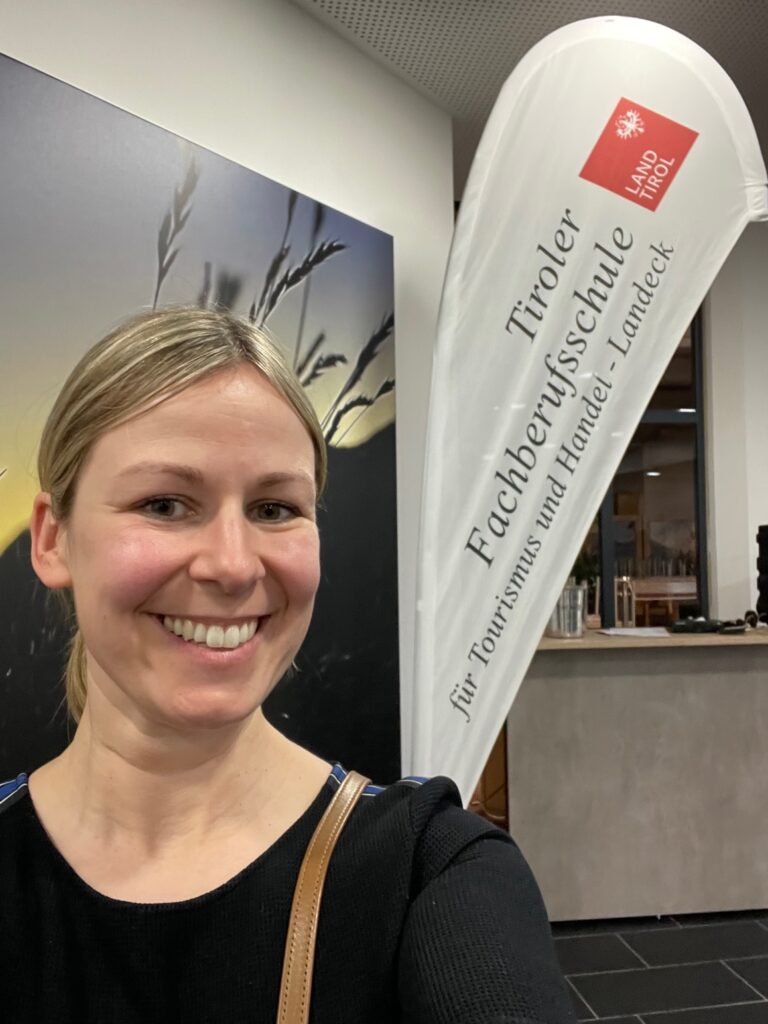
Im März 2023 war ich für so einen Workshop in Landeck im wunderschönen Tirol. Wir haben diskutiert, wie Schüler:innen Social Media Marketing besser lernen können, das ist speziell in einer vom Tourismus geprägten Region wichtig. Aber auch Fake News waren ein großes Thema.
Große Ehre und Freude: Ich durfte Ende Jänner bei ARTE Info in Straßburg einen Social-Media-Strategie-Workshop halten. Ein Erlebnis, weil mir meine gute Freundin Alena damals, als ich ca. 12 war, gesagt hat: ARTE, das schauen die gscheiten Leut. Auch, weil es für das Meeting zwei Simultanübersetzerinnen gab. Und überhaupt, weil dort sehr tolle Menschen arbeiten, die konsequent gute Inhalte produzieren.
Stadler Völkel Rechtsanwälte und die Medienanwältin Eva Hammertinger gingen in die nächste Runde des Diskussionsformats #rooftop.talk in Kooperation mit dem STANDARD. Meine Wenigkeit durfte wieder moderieren. In der Diskussion stellten wir uns die Frage, wie Humor als Kommunikationsmittel verwendet werden kann. Die Gäste waren dieses Mal die Superstars des Humors in Österreich: Martin Moder beweist seit Jahren als Wissenschafter und Mitglied der Science Busters, wie Wissenschaftskommunikation in modernen Kanälen aussehen kann. Michi Skopek wiederum unterhält Hunderttausende auf seinem Tiktok-Account mit Parodien aus dem (Schul)-Alltag und ist damit so erfolgreich, dass er auch Werbekooperationen eingehen kann. Wie weit darf Humor aber rechtlich gehen? Was ist erlaubt und was nicht? Wie gehen die Social-Media-Plattformen damit um? Über versehentlich geblockte Accounts, Regeln für Influencer, aktuelle Social-Media-Trends und Influencerinnen und die Grenze zwischen Fake News, Irreführung und Comedy klären die Anwälte und Anwältinnen Eva Hammertinger und Arthur Stadler (nicht verwandt ;-)) auf. Den Livestream der Diskussion gibt es hier zum Nachschauen.
Hauptabteilungsleiterin Kommunikation & Marketing bei Österreichische Galerie Belvedere. Früher: Head of Social Media bei derStandard.at. Mitglied beim Kollektiv ETEPETETE, Slawistin, Moderatorin, Workshops zum Thema Social Media für Unternehmen. Gastvortragende und ehemalige Unterrichtende an diversen FHs.




 Auch, weil es für das Meeting zwei Simultanübersetzerinnen gab. Und überhaupt, weil dort sehr tolle Menschen arbeiten, die konsequent gute Inhalte produzieren.